Back
Proxy for WhatsApp in 2026: Stop Losing Accounts
WhatsApp is the most unforgiving major platform for multi-accounting: numbers get banned before you send your first message. Yet business across Africa, South Asia and Latin America runs on WhatsApp — sales, support, outreach. Here's how proxies solve the ban problem, which type fits which task, and which mistakes kill numbers in batches.
Why WhatsApp bans accounts
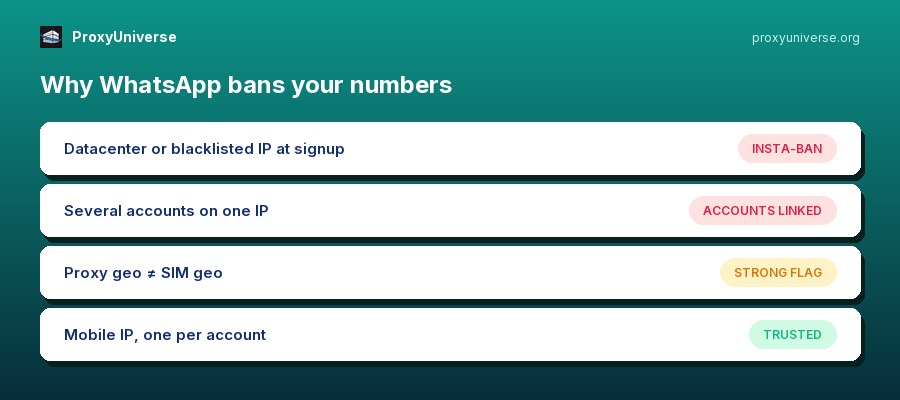
WhatsApp runs two layers of defense. The first fires at registration: the platform scores the reputation of the IP the number arrives from. A datacenter IP or a blacklisted address means the number dies minutes after activation — the classic insta-ban. The second layer is behavioral: several accounts on one IP, bulk messaging, sudden geo jumps. Each factor alone raises suspicion; two or three together mean a ban.
Why mobile proxies are the WhatsApp standard
WhatsApp is a mobile app, and the platform expects mobile traffic. Mobile proxies have a property nothing else has: one carrier IP is shared by thousands of real subscribers through CGNAT, so banning a mobile IP is too expensive — hundreds of legitimate users would drop with you. Hence the rule: registration and warm-up go through a mobile proxy only, matching the country of the number.
Which proxy for which task
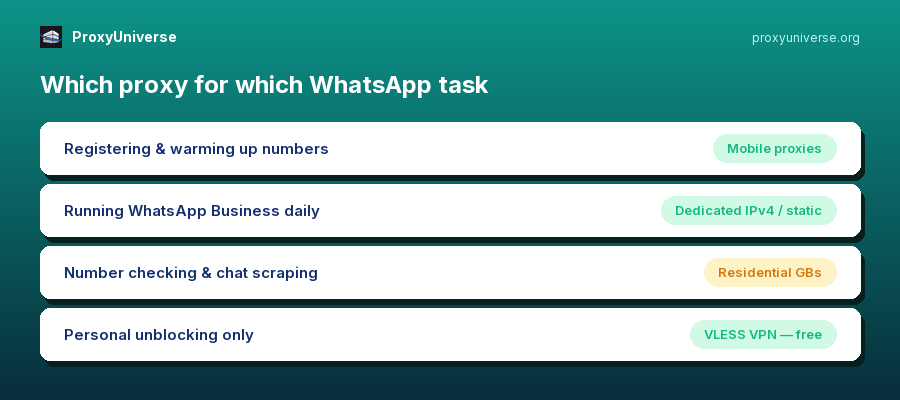
Registering and warming up numbers — mobile proxies. The most sensitive stage; saving money here means losing numbers.
Running warmed-up WhatsApp Business accounts — dedicated IPv4 or a static residential IP: one persistent address per account, so the platform sees a stable user.